



Brent Marchant@Brent_Marchant
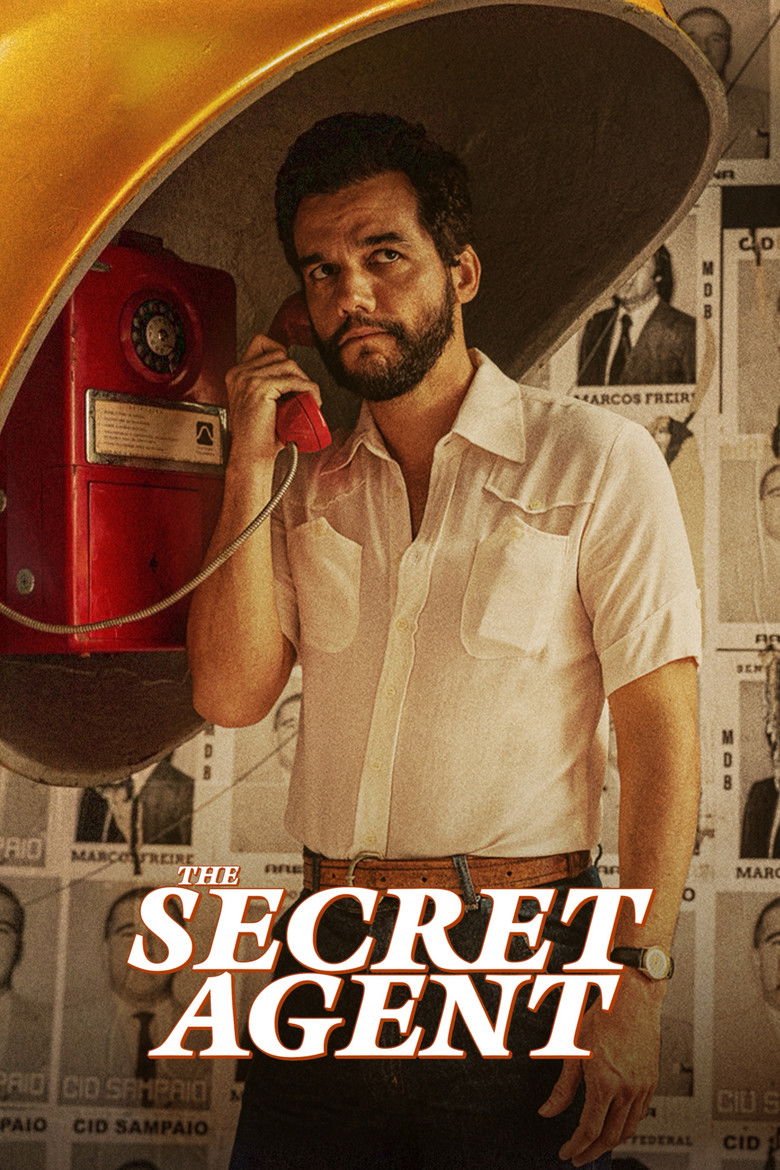
The key to making a successful political thriller is to maintain a taught sense of mesmerizing, edge-of-the-seat intrigue. Unfortunately, that’s precisely the element that’s missing in this overlong, annoyingly convoluted tale set in 1977 Brazil during the waning days of its military dictatorship. The story follows the life of Armando (Wagner Moura), a former university researcher targeted for manipulation and framing by a corrupt, influential businessman (Luciano Chirolli) when the educator refuses to play ball with him. This, in turn, leads to a death threat against Armando, who must do whatever it takes to try and clear his name and stay alive. In the process, however, Armando gets caught up in a web of deceit, criminality and personal peril involving a shady police chief and his dubious associates, a pair of ruthless hitmen, a group of Brazilian and Angolan political dissidents in hiding, and a Holocaust survivor mistakenly believed to be a Nazi refugee. From this, it would appear that the film has a premise filled with potential to make for an engaging yarn, but, regrettably, it fails under the weight of its many shortcomings, most notably an overextended narrative that excessively delves into the details of government research funding and sociopolitical clashes involving regional Brazilian cultural and political differences, material that’s often tedious and not especially engaging. To complicate matters, director Kleber Mendonça Filho has compiled a mishmash of filming and storytelling styles that frequently impairs the picture’s flow and style, including a wealth of easily excised incidental material that tries viewer patience the further one gets into the story. This is clearly a case of a filmmaker in need of reining himself in, knowing when to kill his darlings, and unsuccessfully maintaining a level of suspense that, sadly, largely evaporates about an hour into the picture. In addition, this offering incorporates a present-day story thread involving a history student (Laura Lufési) assigned to transcribe surveillance tape recordings of Armando made at the height of his ordeal, a task that inexplicably captivates her, prompting her to learn more about the fate of her subject. It’s a needless subplot that evokes a huge “so what?” quality and could have readily been eliminated without damaging the picture in the slightest. I’m truly mystified how this bloated release ended up being the most honored candidate at this year’s Cannes Film Festival, capturing four awards, including best actor and director, as well as a Palme d’Or nomination, the event’s highest honor. This is a genre with so many other better offerings that one would be wise to watch in place of this disappointing effort.
Chandler Danier@chandlerdanier
This film looks great. Brazil is such a cool place. I want to go live in this time...but as a rich white guy visiting who doesn't have to deal with the apparent horrors. Perhaps we could do a The Secret Agent 2 starring me.
I'd probably have to duck while using the phone booth. I crouch well.
Fun story. Interesting characters. Great! I bet this will get a Hollywood redux in a few years.

CinemaSerf@Geronimo1967
First things first: if you’re expecting something from “U.N.C.L.E.” via Ian Fleming then you are probably going to be disappointed. This isn’t that kind of drama. Instead, it follows three characters portrayed by Wagner Moura who have to navigate a series of political intrigues that begin in 1970s Brazil. Academic “Marcelo” (aka “Armando”) has arrived in his home city of Recife under some sort of cloak of secrecy; is being shielded by the wily “Dona Sebastiana” (a scene-stealing Tânia Maria) and some other citizens more inclined to freedom and is soon searching the local files for information regarding his late mother. As the plot evolves, we discover that he was formerly a university scientist whose career was kiboshed by a corrupt industrialist quite happy to steal ideas amidst a state where the rights of the individual were clearly second to a state run by a phalanx of corrupt police officers, or meagrely paid hitmen. Right from the start we are presented with symbolism of that, of extortion and bribery and of a society where the Cruzeiro is king and that theme prevails through what is essentially a three act play. The object of this isn’t always clear, and just when I thought I was making some headway it veered off on tangents. There is a sub-plot regarding his new, fleeing, house-mates; another more focussed on his son and cinema-owning father-in-law and there are also frequent interventions from two women who are transcribing tape recordings of conversations either featuring or about one of Moura’s characters. Who are these latter women? Well that ambiguity survives the film and it didn’t help keep the focus taught as the pace takes quite a dip towards the closing (second) phase of his escapades. There are aspects of the quite subliminally menacing throughout this critique on a society largely afraid of it’s own government, or certainly of doing anything about it, and although the ending of the film and the ending of the principal thrust of the plot don’t happen at quite the same time, there are no signs of any happy endings as the plotting and counter-plotting are given a distinctly human face. Though it is probably half an hour too long, it does merit a second watch as I found it made more sense once I’d established the initial ground rules and characterisations and could concentrate more on a quite cleverly woven and internecine story.